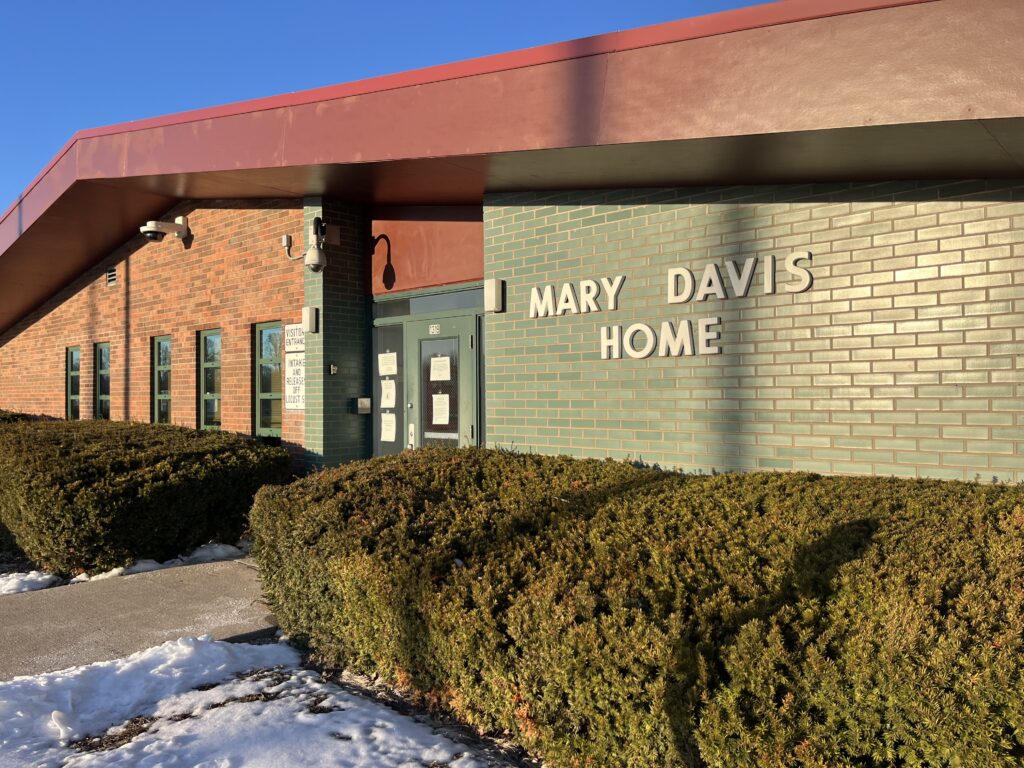
The announced closure of the Mary Davis Home has raised a host of questions in Knox County: Why is the facility closing? Was it because of a lawsuit? What changed? And what happens next for youth who need to be detained?
The timing has added to the confusion. The night before the closure was announced, the Knox County Board voted to transfer $500,000 to the facility to cover operating costs due to delayed state reimbursements. Residents have asked whether the board knew the facility was about to close, and if not, why such a large expenditure was approved so close to the announcement.
Galesburg Community News is publishing this explainer because key questions remain unanswered. This story aims to lay out — in one place — how the Mary Davis Home reached this point and what is still unclear.
What is the Mary Davis Home?
The Mary Davis Home is a juvenile detention facility in Galesburg that houses youth under the jurisdiction of the courts for criminal offenses. It serves teenagers, generally ages 14 to 18, though younger children have also been placed there.
The facility has been part of the Galesburg community since 1913. It operates under the oversight of the Ninth Judicial Circuit Court, while the Knox County Board is responsible for approving its budget. The home is staffed by counselors and supervisors who oversee daily operations and programming.

The Mary Davis Home is a 39-bed facility. According to a 2025 inspection report by the Illinois Department of Juvenile Justice, the facility employed 26 counselors and five supervisors, representing the highest staffing levels in two years. A typical shift included five or six staff members, including a supervisor, which inspectors said should have been sufficient given the average size of the youth population housed at the facility.
A short timeline of how we got here
A shift began in 2022, when Illinois adopted updated standards for county juvenile detention facilities. The changes raised expectations around staffing levels, mental health services, education requirements, suicide prevention and limits on isolation, with an overall emphasis on rehabilitative care.
Pressure increased over the following two years as inspections found the Mary Davis Home was struggling to meet those standards. Compliance became more difficult as the new requirements demanded additional staffing, specialized training and higher ongoing costs, according to reporting by Tri States Public Radio.
In 2024, a federal lawsuit was filed against the Mary Davis Home alleging mistreatment of youth, including excessive isolation. In at least one instance cited in court filings, a youth was allegedly held in confinement for most of the day. The home and local officials denied the allegations.
Federal court involvement deepened in late 2024 and 2025, with a judge ordering limits on certain confinement practices and requiring changes related to mental health protections. The U.S. Department of Justice later filed a statement of interest in the case, increasing federal attention.
On Jan. 28, 2026, the Knox County Board approved a $500,000 transfer to keep the facility operating while waiting for delayed state reimbursements.
The following day, the judge overseeing the Mary Davis Home announced the facility would close indefinitely on March 21, 2026.
What changed in Illinois — and why it mattered
The updated state standards were intended to improve conditions for youth in detention by strengthening mental health services, limiting isolation, and ensuring consistent education and supervision.
For older detention facilities, meeting those standards has proven challenging. Aging buildings, staffing shortages and long-standing operational models are often not easily adapted to higher expectations. It necessitated a restructuring of how detention facilities operate day to day.
A required inspection by the Illinois Department of Juvenile Justice in 2024 illustrates how compliance extended into routine operations. Inspectors cited the facility for multiple areas of noncompliance, including food storage and sanitation practices, ventilation and lighting, and staffing related to food preparation. The 2025 inspection report recommended hiring additional dietary staff to avoid relying on security personnel for meal preparation.
Was the lawsuit the reason for the closure?
Based on available reporting, it does not appear the lawsuit alone caused the Mary Davis Home to close.
The facility was already struggling to meet updated state standards before the lawsuit was filed. However, the lawsuit intensified the situation. Once the home’s practices became subject to federal court oversight, continued operation would have required immediate and full compliance with the new standards, rather than gradual adjustments over time.
Why compliance became difficult to sustain
“Compliance” in this context did not mean fixing a single problem or making a one-time repair. It meant ongoing operational changes, including increased staffing, expanded mental health services, higher supervision ratios, and stricter education and documentation requirements.
In recent years, the facility relied on staffing waivers to fill positions when fully qualified applicants were difficult to find. According to the 2025 inspection report, the Administrative Office of the Illinois Courts approved a waiver allowing the facility to hire staff with 60 college credit hours or an associate’s degree, rather than a bachelor’s degree.
For a small, county-run detention home, these requirements represented continuing operational costs rather than one-time investments.
Why close instead of addressing the ongoing issues?
Local officials have not released a detailed public cost estimate or timeline of what it would have taken to bring the Mary Davis Home into full compliance.
Knox County owns the building and is responsible for its upkeep, while much of the facility’s operating funding comes from the state. Delays in state reimbursements have periodically required the county to cover expenses upfront, including the $500,000 transfer approved in January.
In announcing the closure, Chief Judge Raymond Cavanaugh cited the growing financial burden on the county and judicial circuit. In a written statement, he said the scope of state and federal mandates related to the care, education, and mental and physical health treatment of detained juveniles had become “not economically sustainable” for Knox County taxpayers and would be “better managed by larger municipalities and/or the State of Illinois.”
What happens to detained youth now?
This remains one of the largest unanswered questions.
With the Mary Davis Home closing, youth who require detention will be placed through larger municipalities or state-managed systems, according to court officials. Specific placement locations have not been publicly identified.
The shift raises concerns about distance from family and legal counsel, continuity of education, transportation costs and access to the courts.
What we still don’t know
As of now:
- No full public accounting has been released detailing the cost of bringing the facility into compliance
- No long-term detention strategy for Knox County has been publicly outlined
- It is unclear what will happen to the Mary Davis Home building or recent investments made there
- It remains unknown whether alternatives to detention will be expanded locally
GCN has requested on-the-record comment from county and court officials and will update this story as additional information becomes available.