Pamela Johnson doesn’t just tell the story of Mary Ann Bickerdyke. She becomes her.
Dressed in period clothing and speaking in character, the longtime Galesburg teacher has spent years portraying the Civil War nurse and humanitarian better known as Mother Bickerdyke. Many in Galesburg recognize her statue outside the Knox County Courthouse, but fewer know her story.
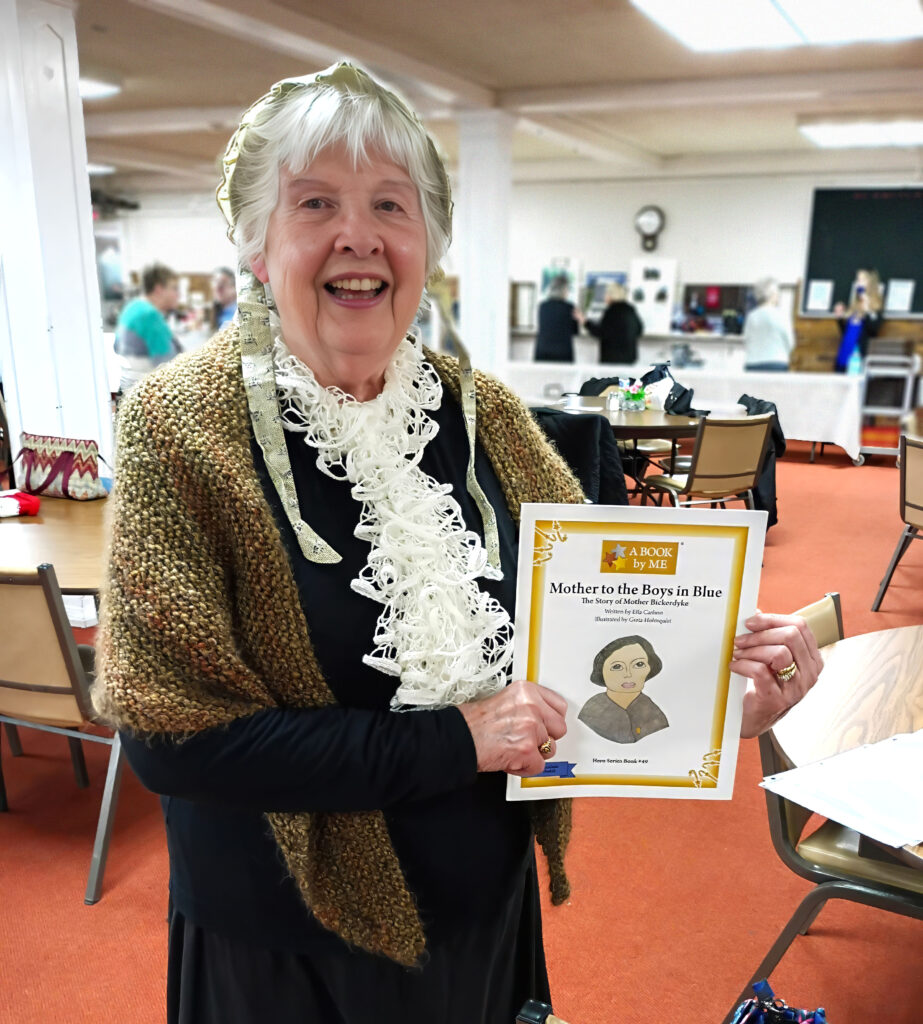
More than 20 years ago, Johnson’s journey began with a question. Looking at the statue outside the Knox County Courthouse, she asked a friend who the woman was. The answer set her on a path to becoming a devoted local historian.
During the Civil War, Bickerdyke pushed for basic sanitary conditions in military camps and hospitals, where disease and infection often killed more soldiers than battlefield wounds. She worked across multiple battlefields, advocating for clean water, clothing and food, and often defied military authority to improve care for the wounded.
Bringing history to life
For Johnson, learning that history sparked a deeper interest in sharing it with others.
Johnson, who taught school for 34 years and later spent another decade substituting, said history has always been her passion. But discovering Bickerdyke’s story in the early 2000s gave that interest new direction: helping others in Galesburg understand the legacy of a woman often seen but rarely understood.
Johnson was given a copy of “Cyclone in Calico,” written by Nina Baker in 1952, detailing Bickerdyke’s efforts to improve conditions for soldiers during the Civil War.
“I read that and I thought, ‘My goodness, this woman was amazing,’ ” Johnson said. “How come more people don’t know who she is?”
Instead of simply sharing the story, Johnson began performing it.
From classroom to character
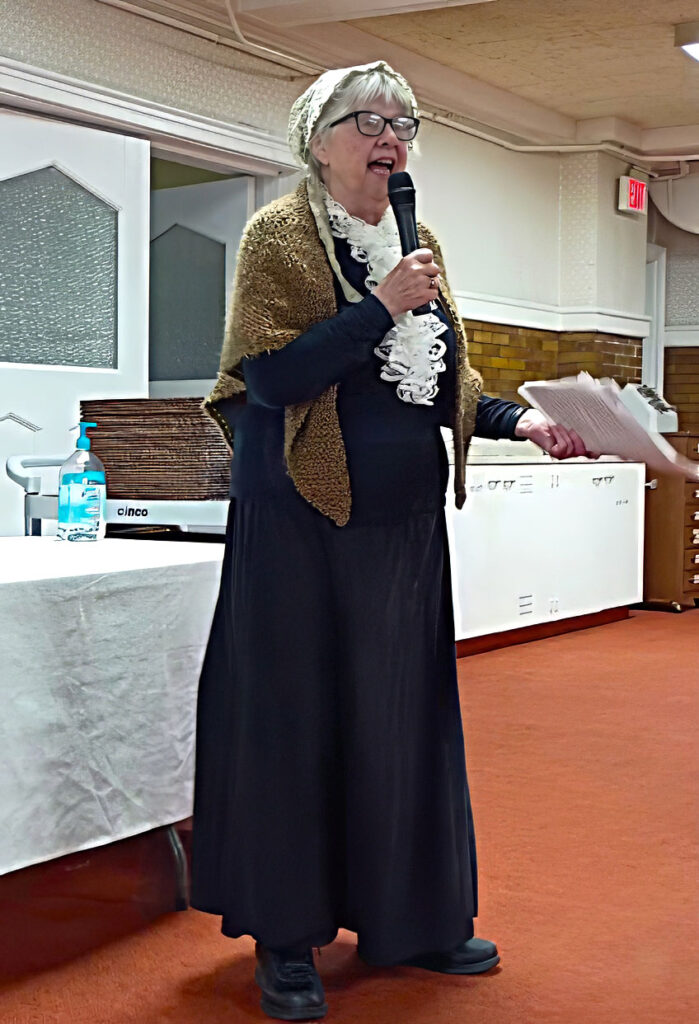
She first portrayed Mother Bickerdyke in 2004 at a Daughters of the American Revolution meeting in Galesburg and has continued ever since, speaking to civic groups and historical gatherings.
Johnson said portraying the historical figure works because students — and adults — often remember stories better when they are acted out.
Over time, she refined both the presentation and the costume.
Bickerdyke typically wore black when speaking publicly, leading Johnson to create a darker, more formal outfit for indoor appearances.
For outdoor programs, especially those geared toward children, she sometimes wears a gray calico-style dress meant to reflect the clothing Bickerdyke wore while working in the field.
Johnson approaches the role with the same energy she once brought to the classroom.
She taught students from elementary through junior high throughout her career. That breadth helped shape the way she presents history now — not as a list of dates, but as a collection of people, choices and stories.
“It’s the true stories that make it good,” Johnson said.
A nurse who challenged the system
Bickerdyke was not only a nurse, but a determined advocate who pushed for clean clothes, clean water, decent food and sanitary conditions at a time when such basics often meant the difference between life and death.
“She wasn’t going to let anybody stop her,” Johnson said. “She didn’t care if they were generals. She didn’t care who you were.”
Bickerdyke was living in Galesburg when the Civil War began and was asked to go to Cairo, Illinois, by the Rev. Edward Beecher, pastor of the Congregational Church.
Beecher was the brother of “Uncle Tom’s Cabin” author Harriet Beecher Stowe.
What began as a short-term effort to care for sick and wounded soldiers became years of service.
Bickerdyke served on multiple battlefields — 19, according to Johnson, though sources differ — and helped establish field hospitals. She earned a reputation for toughness, practical skill and an unwillingness to be intimidated by military bureaucracy.
A local legacy takes shape
Johnson’s work extends beyond performances.
She helped organize a 200th birthday celebration for Bickerdyke in 2017, working with local historical groups and community leaders. The public event near the courthouse included cake and ice cream.
She also helped secure the naming of Bickerdyke Bridge in Galesburg in 2014, appearing before the City Council in costume to argue the nurse and humanitarian deserved the honor.
Even in retirement, Johnson continues to speak when asked, presenting to organizations ranging from DAR chapters to historical and civic groups.
More than a name on a statue
When Johnson steps into the black dress or the field-worn gray calico, she is not simply re-enacting the past. She is teaching in a way that makes history memorable.
Johnson hopes audiences carry away not just a list of accomplishments, but an understanding of the woman behind the name.
Mother Bickerdyke cared for soldiers, advocated for veterans, helped orphans and spent much of her life in service to others, Johnson said. Yet many in her adopted city still do not know her story.
Johnson has spent years trying to change that, one presentation at a time.